The Road You are on Is Not Always The Right One
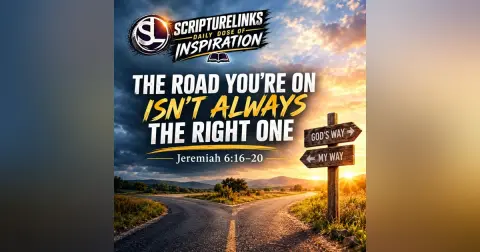
Jeremiah 6:16–20 presents a powerful invitation and a sobering warning. God tells His people to stand at the crossroads, look around, ask for the ancient paths, and walk in the good way. Yet their response is heartbreaking: “We will not walk therein.”
The passage challenges us to examine the direction of our own lives. We can ask God for guidance while already knowing what He has called us to do. We can pray for His will while resisting His instruction. We can admire the right path without actually walking on it.
God’s question to Jeremiah’s generation is still worth asking today: Which way are you going?
This episode challenges us to stop at the crossroads, listen for God’s direction, and choose obedience over convenience.


Key Takeaways
- Jeremiah 6:16 invites us to pause at life's crossroads, look around, and search for the ancient paths where true rest can be found.
- It is entirely possible to pray for God's guidance while actively resisting the specific instructions He has already given us.
- Admiring the right path from a distance is not the same as taking the necessary steps to walk on it.
- God's sobering warning to Jeremiah's generation challenges us today to choose genuine obedience over what is merely convenient.
- Living out our faith requires us to stop, listen for God's direction, and commit to following His proven way.
Jeremiah 6:16–20
Jeremiah describes a people standing at a crossroads. God tells them to stop and consider their direction. He points them toward the “old paths” and the “good way.”
But they refuse.
The issue wasn’t a lack of information. It was a lack of willingness.
There are times when we ask God to show us His will when what we really want is for God to approve the path we’ve already chosen.
Three challenges from this passage:
Stop.
Before continuing down the road you’re traveling, pause and examine where it is taking you.
Ask.
God tells His people to seek the ancient paths—the established way that leads to what is good.
Walk.
Knowing the right path isn’t enough. The command was to actually walk in it.
And perhaps the most challenging question is this:
Are we genuinely looking for God’s direction, or are we looking for God’s permission?
Application Questions
- What “crossroads” are you facing in your life right now?
- Are you willing to stop and honestly examine the direction you’re going?
- Is there something God has already made clear that you are resisting?
- Do you sometimes ask God for guidance after you’ve already decided what you want to do?
- What would it look like for you to actually “walk” in the good way rather than simply know what it is?
- What might you need to change if you discover that you’re traveling in the wrong direction?
Short Prayer
Lord, help us to stop long enough to examine the road we’re traveling. Give us humble hearts that are willing to listen when You speak. Help us seek the good way rather than simply the convenient way. And when You show us the path You want us to take, give us the courage and obedience to walk in it. In Jesus’ name, amen.
Verse of the Day
“Thus saith the LORD, Stand ye in the ways, and see, and ask for the old paths, where is the good way, and walk therein.”
— Jeremiah 6:16 KJV
Frequently Asked Questions
What does the Bible mean by the ancient paths?
The 'ancient paths' refer to God's timeless truths, moral standards, and the faithful ways of walking with Him that lead to spiritual rest and peace.
How can I tell if I am on the wrong road in life?
You may be on the wrong road if you find yourself constantly resisting God's known instructions while still asking Him to bless your current direction.
Why do people reject God's guidance at the crossroads?
People often reject God's direction because human convenience, distractions, and stubbornness make worldly shortcuts much more appealing than the disciplined walk of faith.
Speaker A: Good morning and welcome to this brand new day. This is Scripture Links Daily dose of Inspiration for Friday, September 18, 2026, and today is National Cheeseburger Day. I love a good cheeseburger and I'm probably gonna go get one today for lunch. Looking ahead to the weekend, Saturday is National Butterscotch Pudding Day and Sunday is National Pepperoni Pizza Day. So we got a good, good weekend of eating coming up here. I like the sound of that. Saturday. This Saturday is the birthday of Charles Carroll, who was born on Saturday in 1787. So September 19th, he was born. Who was he? He was the last person to sign the Declaration of Independence. He also was the first US Senator for the State of Maryland. And today, on this day, September 18th, back in 1793, President Washington laid the first cornerstone for the Capitol Building. There we go. Some, some completely useless information for you. Maybe you'll find it helpful one day. Our scripture reading this weekend, 1st Samuel chapter 1517 today, 1st Samuel chapter 1821 Saturday and 1st Samuel 22 through 24 Sunday as we're continuing reading in our reading through the the history of Ancient Israel, and I hope you find that as fascinating as I do. Anyway, today we're going to look at Jeremiah chapter number six, and we're going to look at the topic of the path that we're on. And what if the problem isn't that God hasn't shown you the way? What if he has shown you the way and you simply don't like where it leads? In Jeremiah 6, God tells His people to stop, look and ask for the old paths and walk in a good way. But their response reveals something troubling. They don't want to walk in it. Sometimes God's direction is not unclear. Sometimes our hearts are simply unwilling. Jeremiah chapter 6, verses 16:20 says this. Thus saith the Lord, Stand ye in the ways and see, and ask for the old paths. Where is the good way? And walk therein, and ye shall find rest for your souls. But they said we will not walk therein. Also, I sent watchmen over you saying, hearken to the sound of the trumpet. But they said, we will not hearken. Therefore hear ye nations, and know, O congregation, what is among them. Hear, O earth. Behold, I will bring evil upon this people, even the fruit of their thoughts, because they have not hearkened unto my words, nor to my law, but rejected it. To what purpose cometh there to me? Incense from Sheba and the sweet cane from a far country. Your burnt offerings are not acceptable, nor your sacrifices sweet unto me. I'm going to stop right there. Let's break this down, see what God has for us today. And God think about this thought as we go through our study today. God's direction is only helpful if we are willing to follow it. Sometimes the hardest step of faith is not discovering which way God wants us to, to go, but sometimes it's being willing to leave our own path and walk in His. This is going to be challenging today and I hope you, you listen to what God is telling us here. He starts off in verse number 16. Thus sayeth the Lord, stand y the waves and see and ask for the old path, where is the good way? And walk therein. I want to stop there for just a second because God's given us the picture, he's given us the image here of somebody that's out traveling and they've come to a crossroad, they come to a, a, a bend in the road. They, they came to a spot that they could take multiple directions. And, and he tells us here, he, he says, stand ye in the way and see and ask, see what is the good direction. See what is the way you're supposed to go. See what is the good path. Long before the days of, of a GPS system, a traveler would often have to to seek out the good roads, the established roads. And well, even today sometimes our GPS has fail us and take us into places that we really don't have a road. But God's telling us to seek the old ways. And when he's talking about seeking the old way to seeking the old paths, he's referring, I believe firmly he's referring to his ways. Think of when you first had given your life to Christ. You were doing everything you could to honor Him. You were studying His Word, you were sharing your faith, you know, in his house. But as you grow older, sometimes that stuff starts waning a little bit. Sometimes we quit reading the Bible, sometimes we quit praying and seeking after him. And then we start being open to the evil things that we're going to see as we continue studying here in Jeremiah chapter 6. And that's why it's so important that we have to stay on the old ways and to stay on the established paths. He says here to stop, he said to ask. And then he said to walk, to stop, to see, to look, ask for the old path, where is the good way? And walk therein. And as a result of that he said, and you shall find rest for your soul. You will find rest for your souls. Many, well, many pastors today, I shouldn't say it that way. Many preachers today and teachers like to use phrases like God has given me a new revelation or God has given me a fresh word for today. Instead of seeking these false teachings, we need to seek the old ways, the proven ways. In Jeremiah chapter number 18. Let's look real quick here at verse number 15. Jeremiah, chapter 18, verse 15 says, because my people have forgotten me, they have burnt incense to vanity, and they have caused them to stumble in their ways from the ancient paths, to walk in paths in a way not cast up. What Jeremiah is saying here in, in verse 15, he says, We've forgotten God. We're doing our burn incenses, our burn sacrifices for vanity, for no purpose. And, and those things, those, those burning the incense cause them to stumble from the ancient past because it's become more of a ritual. We're not doing it to praise God, we're doing it because we have to. And he says he's caused us to stumble away from the old paths, to walk in paths that's not established, that's not for us to walk in. So we need to remain in the old paths. We need to remain in the the ways of God. And then one more verse and then we'll move on. Isaiah, chapter 30, Isaiah, chapter 30. We're going to look here in verse number 21. Scripture says, in nine ears shall hear a word behind thee, saying, this is the way. Walk ye in it. When you turn to the right hand or to the left and you know who that voice is, that's the Holy Spirit getting in there and saying, hey, you're going the wrong way. Go this way. This is the path. This is what you got to follow. This is the ancient right way. And when we're lined up according to the will of God, and we're walking in his paths and we're doing his will, that's when we find true rest for our souls. That's when we, we can get the rest that we need. But then some sad words here, the end of verse 16. But they referring to the, to the people of Judah, referring to those of us today. He says, they said we will not walk therein. We're not going to walk according to your laws. We're not going to walk according to your ways. We know better. That's essentially what they're saying. And then he says here in verse number 17, also, I set a watchman over you, saying, hearken to the sound of the trumpet. But they said, we will not hearken. What God's referring to here is that God has set watchmen to, to sound warnings of incoming danger. It's in the book of Ezekiel. I didn't write down the actual scripture reference. I should have, but I forgot. But in Ezekiel, we see that God has called Ezekiel to be a watchman on the wall. And he's. He told Ezekiel, he said, if you hear my word, if I give you my word, and, and you fail to tell the people my word and they don't repent and they die in their sin, then their blood is on your hands. He says, but if I give you my word and you tell the people my word and they die in their sins, then you are free from that because you did what I told you to do. So God is saying here In Jeremiah chapter 17, I have set a watchman over you, saying hearken and to the sound of the trumpet. What God is saying is that, that there's people that's warning incoming danger. And if you fail to heed that warning, then you're going to stumble, then you're going to fall, then you're not heeding that warning. And we need to be going out and being the watchman of the wall on the wall for our generation, for our world, warning them of the impending danger of rejecting Christ. That's what we need to warn people of, the danger of rejecting Christ. And the rest of verse 17 here says, but they said, we will not hearken. We're not going to listen to that warning. And that's what so many people are saying today. We're not going to listen to that warning. We have no need of Jesus. We are, because we are living the way God created us. And, and people aren't paying attention to the warnings. They're not going and living on the old paths anymore. And then verse 18 and 19 here gives us a warning. It talks about God's coming judgment. He says, here, therefore hear ye nations, and know, O congregation, with what is among them. What is among them is meaning. Their sins are going to be exposed, their rejection is going to be exposed. Their false idols, their false teaching, their false doctrine is going to be. Is going to be exposed, and it's going to be judged. We don't like to hear so much of that stuff. Don't judge me. But there's coming a time of. Of judgment. And he says that in verse 19, Hear, O earth, behold, I will bring evil upon this people, even the fruit of their thoughts, because they have not hearkened unto my words, nor to my law, but rejected it. Notice I'm going to bring evil. I'm going to Bring judgment upon these. These people. I'm going to. I'm going to make it that they're not going to turn, that their hearts are going to be hardened, that they. You know, there's going to come a point, and we don't like to talk about this. We don't like to hear about this. I don't either. But there's going to come a point where we've rejected God so much. We've rejected his calling, we've rejected his. His correction. That God's going to say, you know what? Let them go. Let them do what they want to do. Let them die in their folly. It's going to come that time. It's called a reprobate mind. It's a mind that's not ever going to come to God. And God says he's going to bring evil even to the fruit of their thoughts. Their thoughts are going to be wicked. Their life is going to be wicked. Why? He says, because they have not hearkened. They have not listened to my words. They have not listened to my warning. They have not listened to my correction, nor to my law, but they have rejected it. What a sad state to be in. Right there. And then, verse 20, he talks about a worthless kind of. Of worship. He says, to what purpose cometh there to me? Incense from Sheba and a sweet cane from a far country. Your burnt offerings are not acceptable, nor your sacrifice is sweet unto me. What God is saying here is these. These sweet cane from a far country, this incense from Sheba. These were all rituals that they had done in their worship. God doesn't want these rituals no more. God doesn't want. God doesn't want the sacrifices. God wants our obedience. That's what God's desiring. He wants our obedience. He wants us to walk in the old paths. He wants us to heed his warnings of danger. He wants us to tell others about the danger of rejecting Christ. And by and large, we've all rejected that. We don't want to walk in it. We don't want to walk in God's direction. Friend, where are you at today? Are you walking and following the path that God has for you? Or are you trying to trailblaze some new pathway that you think God's gonna bless? Think about that as you go through this day. And remember, get into God's word and allow God's word to get into you. Then share that word with someone today. Have a blessed day.
